



"孝" • Chinese-English Dictionary
| |||||||||||||||||||||||||||||||||||||||
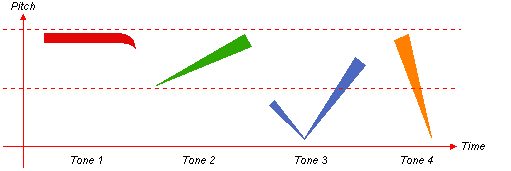
| 孝 |  xiào xiào | filial piety or obedience / mourning apparel |   | ||||||||||||||||||||||||||||||||||||
Results beginning with 孝 | |||||||||||||||||||||||||||||||||||||||
| 孝顺 | xiào shùn | filial / dutiful / devoted to one's parents (and grandparents etc) / to show filial piety towards (an older family member) / filial piety | | ||||||||||||||||||||||||||||||||||||
| 孝敬 | xiào jìng | to show filial respect / to give presents (to one's elders or superiors) / to support one's aged parents | | ||||||||||||||||||||||||||||||||||||
| 孝子 | xiào zǐ | filial son | | ||||||||||||||||||||||||||||||||||||
| 孝心 | xiào xīn | filial piety (a Confucian obligation) / respect and obedience to one's parents | | ||||||||||||||||||||||||||||||||||||
| 孝道 | xiào dao | filial piety (Confucian virtue) / to be a good son or daughter | | ||||||||||||||||||||||||||||||||||||
| 孝廉 | xiào lián | xiaolian, two examination subjects in Han, later a single subject in Ming and Qing / successful second degree candidate | | ||||||||||||||||||||||||||||||||||||
| 孝经 | Xiào jīng | Xiaojing (Classic of Filial Piety) | | ||||||||||||||||||||||||||||||||||||
| 孝服 | xiào fú | mourning clothes | | ||||||||||||||||||||||||||||||||||||
| 孝悌 | xiào tì | filial piety and fraternal duty | | ||||||||||||||||||||||||||||||||||||
| 孝昌 | Xiào chāng | Xiaochang county in Xiaogan 孝感[Xiao4 gan3], Hubei | | ||||||||||||||||||||||||||||||||||||
| 孝感 | Xiào gǎn | see 孝感市[Xiao4gan3 Shi4] | | ||||||||||||||||||||||||||||||||||||
| 孝南 | Xiào nán | Xiaonan district of Xiaogan city 孝感市[Xiao4 gan3 shi4], Hubei | | ||||||||||||||||||||||||||||||||||||
| 孝肃 | Xiào sù | Xiaosu, posthumous name of Bao Zheng 包拯[Bao1 Zheng3] (999-1062), Northern Song official renowned for his honesty | | ||||||||||||||||||||||||||||||||||||
| 孝义 | Xiào yì | Xiaoyi, county-level city in Lüliang 呂梁|吕梁[Lu:3 liang2], Shanxi 山西 | | ||||||||||||||||||||||||||||||||||||
| 孝衣 | xiào yī | mourning garment | | ||||||||||||||||||||||||||||||||||||

» MORE
| 孝昌县 | Xiào chāng xiàn | Xiaochang county in Xiaogan 孝感[Xiao4 gan3], Hubei | |
| 孝成王 | Xiào chéng Wáng | King Xiaocheng of Zhao 趙國|赵国, reigned 266-245 BC | |
| 孝感市 | Xiào gǎn shì | Xiaogan, prefecture-level city in Hubei Province 湖北省[Hu2bei3 Sheng3] | |
| 孝南区 | Xiào nán qū | Xiaonan district of Xiaogan city 孝感市[Xiao4 gan3 shi4], Hubei | |
| 孝圣宪 | Xiào shèng xiàn | Empress Xiaoshengxian (1693-1777), consort of Emperor Yongzheng 雍正[Yong1 zheng4] and mother of Emperor Qianlong 乾隆[Qian2 long2] | |
| 孝义市 | Xiào yì shì | Xiaoyi, county-level city in Lüliang 呂梁|吕梁[Lu:3 liang2], Shanxi 山西 | |
| 孝思不匮 | xiào sī bù kuì | to be forever filial (idiom) | |
| 孝悌忠信 | xiào tì zhōng xìn | Confucian moral injunctions of fidelity / piety to one's parents, respect to one's older brother, loyalty to one's monarch, faith to one's male friends | |
| 孝感地区 | Xiào gǎn dì qū | Xiaogan prefecture in Hubei | |
| 孝仪纯皇后 | xiào yí chún huáng hòu | Empress | |
Approximate Results for 孝 | ||||
| 不孝 | bù xiào | unfilial | | |
| 尽孝 | jìn xiào | to do one's filial duty | | |
| 戴孝 | dài xiào | to wear mourning garb / to be in mourning | | |
| 吊孝 | diào xiào | a condolence visit | | |
| 重孝 | zhòng xiào | mourning dress | | |
| 带孝 | dài xiào | variant of 戴孝[dai4 xiao4] | | |
| 满孝 | mǎn xiào | at the end of the mourning period / to fulfill one's filial duties of mourning | | |
| 守孝 | shǒu xiào | to observe mourning for one's parents | | |
| 脱孝 | tuō xiào | to get through the mourning period | | |
| 谢孝 | xiè xiào | to visit friends to thank them after a funeral | | |
| 愚孝 | yú xiào | unquestioning filial piety | | |
» MORE
| 明孝陵 | Míng xiào líng | Ming tombs in Nanjing, tomb of founding Ming emperor Zhu Yuanzhang 朱元璋[Zhu1 Yuan2 zhang1], a World Heritage site | |
| 费孝通 | Fèi Xiào tōng | Fei Xiaotong (1910-2005), Chinese sociologist | |
| 李孝恭 | lǐ xiào gōng | Li | |
| 秦孝公 | Qín Xiào gōng | Duke Xiao of Qin, 秦國|秦国[Qin2 guo2], ruled 361-338 BC during the Warring States Period | |
| 曾孝谷 | Zēng Xiào gǔ | Zeng Xiaogu (1873-1937), actor and pioneer of Chinese drama in New Culture style | |
| 章孝严 | zhāng xiào yán | John Chiang (1942-), Taiwan politician | |
| 朱孝天 | Zhū Xiào tiān | Ken Zhu (1979-), Taiwanese singer and actor | |
| 父慈子孝 | fù cí zǐ xiào | benevolent father, filial son (idiom) / natural love between parents and children | |
| 披麻带孝 | pī má dài xiào | to wear mourning clothes / to be in mourning / also written 披麻戴孝 | |
| 披麻戴孝 | pī má dài xiào | to wear mourning clothes / to be in mourning / also written 披麻帶孝|披麻带孝 | |
| 子孝父慈 | zǐ xiào fù cí | see 父慈子孝[fu4 ci2 zi3 xiao4] | |
| 二十四孝 | Er4 shí sì Xiào | the Twenty-four Filial Exemplars, classic Confucian text on filial piety from Yuan dynasty | |
| 百善孝为先 | bǎi shàn xiào wéi xiān | of all virtues filial piety is most important (idiom) | |
| 不孝有三,无后为大 | bù xiào yǒu sān , wú hòu wéi dà | there are three ways to be unfilial / having no sons is the worst (from Mencius 孟子[Meng4zi3]) | |