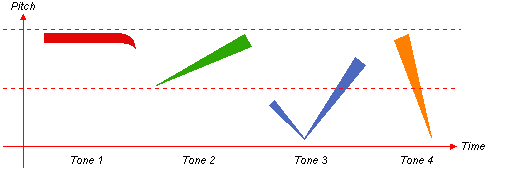
| 史诗般 | shǐ shī bān | epic |  |
| 史诗性 | shǐ shī xìng | epic | |
| 史诗级 | shǐ shī jí | epic / impressive | |
| 物语 | wù yǔ | monogatari / epic narrative (Japanese literary form) | |
| 史诗 | shǐ shī | an epic / poetic saga |  |
| 诗篇 | shī piān | a poem / a composition in verse / fig. epic (compared with historical epic) / the biblical Book of Psalms | |
| 格萨尔 | Gé sà ěr | King Gesar, hero of a Tibetan and Mongolian epic cycle | |
| 哈奴曼 | Hā nú màn | Hanuman, a monkey God in the Indian epic Ramayana | |
| 摩诃婆罗多 | Mó hē pó luó duō | Mahābhārata, second great Indian epic after 羅摩衍那|罗摩衍那[Luo2 mo2 yan3 na4], possibly originally c. 4th century BC | |
| 毗耶娑 | Pí yē suō | Vyasa, Indian sage and scribe, supposed author of epic 摩訶婆羅多|摩诃婆罗多[Mo2 he1 po2 luo2 duo1] and a major figure in it | |
| 玛纳斯 | Mǎ nà sī | Manas, hero of Kyrghiz epic saga / Manas county and town in Changji Hui autonomous prefecture 昌吉回族自治州[Chang1 ji2 Hui2 zu2 zi4 zhi4 zhou1], Xinjiang | |
| 血史 | xuè shǐ | history written in blood / epic period of struggle and sacrifice | |
| 大开大合 | dà kāi - dà hé | (idiom) epic in scope / wide-ranging | |