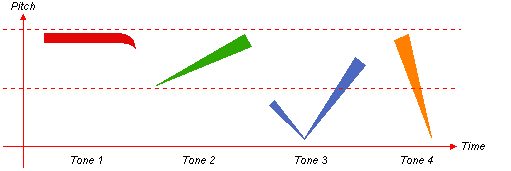
| 哈哈 | hā hā | (onom.) laughing out loud |   |
| 爆笑 | bào xiào | to burst out laughing / hilarious / burst of laughter | |
| 笑语 | xiào yǔ | talking and laughing / cheerful talk | |
| 发笑 | fā xiào | to burst out laughing / to laugh | |
| 有说有笑 | yǒu shuō yǒu xiào | talking and laughing / to jest / cheerful and lively | |
| 格勒 | gé lè | (onom.) laughing sound / glug-glug haha! | |
| 捧腹 | pěng fù | to split one's sides laughing / to roar with laughter / (lit.) to hold one's belly with both hands | |
| 嬉笑 | xī xiào | to be laughing and playing / to giggle | |
| 眉开眼笑 | méi kāi yǎn xiào | brows raised in delight, eyes laughing (idiom) / beaming with joy / all smiles | |
| 失笑 | shī xiào | to laugh in spite of oneself / to be unable to help laughing / to break into laughter | |
| 忍俊不禁 | rěn jùn bù jīn | cannot help laughing / unable to restrain a smile | |
| 喷饭 | pēn fàn | (coll.) to burst out laughing | |
| 贻笑大方 | yí xiào dà fāng | to make a fool of oneself / to make oneself a laughing stock | |
| 笑气 | xiào qì | laughing gas (nitrous oxide) | |
| 捧腹大笑 | pěng fù dà xiào | uproarious / hilarious / to split one's sides laughing / lit. to hold one's belly with both hands | |
| 乐子 | lè zi | fun / pleasure / laughing matter | |
| 一氧化二氮 | yī yǎng huà èr dàn | nitrous oxide N2O / laughing gas | |
| 笑口弥勒 | Xiào kǒu Mí lè | laughing Maitreya | |
| 绝倒 | jué dǎo | to split one's sides laughing | |
| 棕斑鸠 | zōng bān jiū | (bird species of China) laughing dove (Spilopelia senegalensis) | |
| 笑破肚皮 | xiào pò dù pí | to split one's sides laughing | |
| 笑鸥 | xiào ōu | (bird species of China) laughing gull (Leucophaeus atricilla) | |
| 龟笑鳖无尾 | guī xiào biē wú wěi | lit. a tortoise laughing at a soft-shelled turtle for having no tail (idiom) / fig. the pot calling the kettle black | |
| 笑场 | xiào chǎng | (of an actor) to break character by laughing / to corpse | |
| 闹太套 | nào tài tào | (Internet slang) transcription of "not at all" &ndash / English words in a song promoting the 2008 Beijing Olympics sung by Huang Xiaoming 黃曉明|黄晓明[Huang2 Xiao3 ming2], who became a laughing stock in China because his pronunciation was perceived as embarrassingly bad / to be a laughing stock / to make a fool of oneself (i.e. equivalent to 鬧笑話|闹笑话[nao4 xiao4 hua5]) | |
| 捧腹大笑 | pěng fù - dà xiào | (idiom) to split one's sides laughing | |