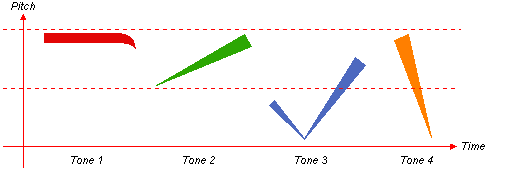
to come / (used as a substitute for a more specific verb) / hither (directional complement for motion toward the speaker, as in 回來|回来[hui2lai5]) / ever since (as in 自古以來|自古以来[zi4gu3 yi3lai2]) / for the past (amount of time) / (prefix) the coming ... / the next ... (as in 來世|来世[lai2shi4]) / (between two verbs) in order to / (after a round number) approximately / (used after 得[de2] to indicate possibility, as in 談得來|谈得来[tan2de5lai2], or after 不[bu4] to indicate impossibility, as in 吃不來|吃不来[chi1bu5lai2])
structural particle: used after a verb (or adjective as main verb), linking it to following phrase indicating effect, degree, possibility etc
置之死地而后生
zhì zhī sǐ dì ér hòu shēng
(idiom based on Sunzi's "The Art of War" 孫子兵法|孙子兵法[Sun1zi3 Bing1fa3]) to deploy one's troops in such a way that there is no possibility of retreat, so that they will fight for their lives and win the battle / to fight desperately when confronted with mortal danger / to find a way to emerge from a dire situation
共存性
gòng cún xìng
compatibility / the possibility of mutual coexistence
止损点
zhǐ sǔn diǎn
(finance) stop-loss point (price at which one resolves to sell a security at a loss in order to avoid the possibility of having to sell later at an even lower price)





 lái
lái