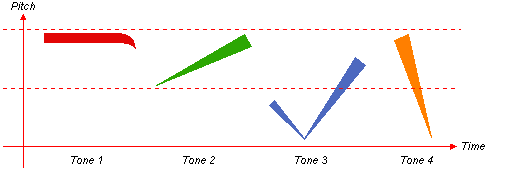
| 隶圉 | lì yǔ | servants / underlings |  |
| 差使 | chāi shǐ | to send / to assign / to appoint / servants of an official / official messenger |  |
| 人丁 | rén dīng | number of people in a family / population / (old) adult males / male servants | |
| 殉葬 | xùn zàng | (of servants etc) to be buried alive with the deceased / (of utensils etc) to be buried with the dead | |
| 国际公务员互助协会 | | International Civil Servants Mutual Association | |
| 争取国际公务员安全和独立协会 | | Association for the Security and Independence of International Civil Servants | |
| 退职国际公务员协会联合会 | | Federation of Associations of Former International Civil Servants | |
| 国际公务员法律地位专题讨论会 | | Symposium on the Legal Status of International Civil Servants | |
| 退职国际公务员协会 | | Association of Former International Civil Servants | |
| 联合国国际公务员协会 | | United Nations International Civil Servants Federation | |
| 工商业工人及家庭佣工疾病保险公约 | | Convention concerning Sickness Insurance for Workers in Industry and Commerce and Domestic Servants | |
| 国际公务员的权利和独立纽约宣言 | | New York Declaration on the Independence and Rights of International Civil Servants | |
| 家姬 | jiā jī | (old) female servants or concubines in homes of the rich | |
| 家爷 | jiā yé | (old) a term servants used to refer to their master | |
| 家法 | jiā fǎ | the rules and discipline that apply within a family / stick used for punishing children or servants / traditions of an artistic or academic school of thought, passed on from master to pupil | |