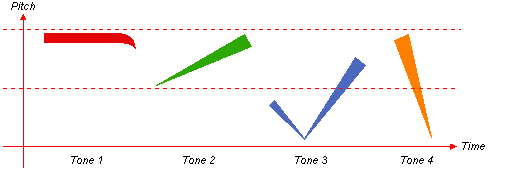
(idiom) (of two or more people) to take the same action without prior consultation / (usu. used adverbially) all (or both) of them, independently / as if by prior agreement
一网打尽
yī wǎng dǎ jìn
lit. to catch everything in the one net (idiom) / fig. to scoop up the whole lot / to capture them all in one go
thousand articles, same rule (idiom) / stereotyped and repetitive / once you've seen one, you've seen them all
寥寥无几
liáo liáo wú jǐ
just a very few (idiom) / tiny number / not many at all / You count them on your fingers.
钓鱼台
Diào yú tái
Diaoyu Islands, located between Taiwan and Okinawa, controlled by Japan &ndash / which calls them the Senkaku Islands &ndash / but claimed by China
吴三桂
Wú Sān guì
Wu Sangui (1612-1678), Chinese general who let the Manchus into China and helped them establish the Qing Dynasty, later leading a revolt against Qing in an effort to start his own dynasty
particle indicating that a previously asked question is to be applied to the preceding word ("What about ...?", "And ...?") / particle for inquiring about location ("Where is ...?") / particle signaling a pause, to emphasize the preceding words and allow the listener time to take them on board ("ok?", "are you with me?") / (at the end of a declarative sentence) particle indicating continuation of a state or action / particle indicating strong affirmation
睹物思人
dǔ wù sī rén
(idiom) to fondly remember a person on seeing sth one associates with them
惩前毖后
chéng qián bì hòu
lit. to punish those before to prevent those after (idiom) / to criticize former mistakes firmly to prevent them happening again
In order to capture, one must let loose. / to loosen the reins only to grasp them better
迷魂汤
mí hún tāng
potion given to souls before they are reincarnated, which makes them forget their previous life (aka 孟婆湯|孟婆汤[meng4po2tang1]) / magic potion / (fig.) bewitching words or actions
不分伯仲
bù fēn bó zhòng
lit. unable to distinguish eldest brother from second brother (idiom) / they are all equally excellent / nothing to choose between them
寥寥可数
liáo liáo kě shǔ
just a very few (idiom) / tiny number / just a handful / not many at all / You count them on your fingers.
得饶人处且饶人
dé ráo rén chù qiě ráo rén
where it is possible to let people off, one should spare them (idiom) / anyone can make mistakes, forgive them when possible
擂鼓鸣金
léi gǔ míng jīn
to beat the drum and sound the gong (idiom) / fig. to order an advance or retreat / to egg people on or to call them back
击鼓鸣金
jī gǔ míng jīn
to beat the drum and sound the gong (idiom) / fig. to order an advance or retreat / to egg people on or to call them back
非异人任
fēi yì rén rèn
to bear one's own responsibilities and not pass them to others (idiom)
郑人买履
zhèng rén mǎi lu:3
lit. the person from Zheng 鄭|郑[Zheng4] who wanted to buy shoes (an allusion to an ancient story about somebody who, when buying a pair of shoes, preferred to rely on their foot measurements rather than just trying them on) (idiom) / fig. disregarding the sensible approach in favor of adherence to a fixed idea
看人下菜碟儿
kàn rén xià cài dié r
(dialect) to treat sb according to their social status, relationship with them etc (idiom) / not to treat everyone equally favorably
看人行事
kàn rén xíng shì
to treat people according to their rank and one's relationship with them (idiom)
闻名不如见面
wén míng bù rú jiàn miàn
knowing sb by their reputation can't compare to meeting them in person (idiom)
black / police runners, from the black clothes formerly worn by them
三人行,则必有我师
sān rén xíng , zé bì yǒu wǒ shī
If three walk together, one of them can teach me sth (Confucius)
上有政策,下有对策
shàng yǒu zhèng cè , xià yǒu duì cè
The higher ups have policies while the lower downs have their own ways of getting around them. (idiom)
吃不到葡萄说葡萄酸
chī bù dào pú tao shuō pú tao suān
sour grapes (set expr. based on Aesop) / lit. to say grapes are sour when you can't eat them
己所不欲,勿施于人
jǐ suǒ bù yù , wù shī yú rén
What you don't want done to you, don't do to others. (idiom, from the Confucian analects) / Do as you would be done by. / Do not do to others what you would not have them do to you.
承欢
chéng huān
to cater to sb to make them happy (esp. of one's parents)
既来之,则安之
jì lái zhī , zé ān zhī
Since they have come, we should make them comfortable (idiom). Since we're here, take it easy. / Since this is so, we should accept it. / Now we have come, let's stay and take the rough with the smooth. / If you can't do anything to prevent it, you might as well sit back and enjoy it.
暖巢管家
nuǎn cháo guǎn jiā
housekeeper who looks after old people with no children or whose children do not live with them
决而不行
jué ér bù xíng
making decisions without implementing them
沤肥
òu féi
to make fertilizer by steeping organic materials in water and leaving them to decompose / fertilizer produced by this method
知过改过
zhī guò gǎi guò
to acknowledge one's faults and correct them (idiom)
绕膝承欢
rào xī chéng huān
to live with one's parents, thus bringing them happiness (idiom)
翻手为云覆手变雨
fān shǒu wéi yún fù shǒu biàn yǔ
lit. turning his hand palm up he gathers the clouds, turning his hand palm down he turns them to rain / very powerful and capable (idiom)
薄养厚葬
bó yǎng hòu zàng
to neglect one's parents but give them a rich funeral / hypocrisy in arranging a lavish funeral after treating one's parents meanly
蜡烛不点不亮
là zhú bù diǎn bù liàng
some people have to be pushed for them to take action
说葡萄酸
shuō pú tao suān
sour grapes (set expr. based on Aesop) / lit. to say grapes are sour when you can't eat them
谢孝
xiè xiào
to visit friends to thank them after a funeral
卖面子
mài miàn zi
to show deference to sb by obliging them (or by obliging sb associated with them)
留守儿童
liú shǒu ér tóng
"left-behind children", rural children whose parents have to make a living as migrant workers in distant urban areas, but cannot afford to keep the family with them
捧杀
pěng shā
to praise sb in a way that does them harm (e.g. by causing them to become complacent)
卡纳纳斯基斯原则
Principles to prevent terrorists, or those that harbour them, from gaining access to weapons or materials of mass destruction / Kananaskis Principles
to bludgeon to death / (fig.) to defeat sb by publicly criticizing them
不怕不识货,只怕货比货
bù pà bù shí huò , zhǐ pà huò bǐ huò
lit. don't worry about not knowing goods, but about comparing them (proverb) / fig. goods' (or person's) true value can only be determined through comparison
不怕不识货,就怕货比货
bù pà bù shí huò , jiù pà huò bǐ huò
lit. don't worry about not knowing goods, but about comparing them (proverb) / fig. goods' (or person's) true value can only be determined through comparison
假一赔十
jiǎ yī péi shí
lit. if one is fake, I shall compensate you for ten of them / fig. (of goods) 100% genuine
十动然拒
shí dòng rán jù
to reject sb after being deeply touched by them (Internet slang)
问客杀鸡
wèn kè shā jī
lit. asking guests whether or not to butcher a chicken for them (idiom) / fig. hypocritical show of affection (or hospitality)
鹬蚌相争,渔翁得利
yù bàng xiāng zhēng , yú wēng dé lì
lit. when the snipe and the clam grapple with each other, the fisherman catches them both (idiom) / fig. when two sides are locked in dispute, it's often a third party that benefits
由怜生爱
yóu lián shēng ài
to develop love for sb out of pity for them
发好人卡
fā hǎo rén kǎ
(slang) to reject sb (by labeling them a "nice guy")
请喝茶
qǐng hē chá
(lit.) to invite to tea / (fig.) (of police etc) to interrogate sb about their subversive political activities and warn them against further involvement
路氹
Lù dàng
Cotai, portmanteau term referring to the islands of 路環|路环[Lu4 huan2] (Coloane) and 氹仔[Dang4 zai3] (Taipa) in Macau / the strip of reclaimed land between Coloane and Taipa / the island formed by Coloane, Taipa and the reclaimed land between them
食之无味,弃之可惜
shí zhī wú wèi , qì zhī kě xī
lit. to be hardly worth eating, but it would still be a pity to discard it (idiom) / fig. some things have little to no value, yet one is still reluctant to part with them
有则改之,无则加勉
yǒu zé gǎi zhī , wú zé jiā miǎn
correct any mistakes you made, but maintain your good record if you did not make them (idiom)
考霸
kǎo bà
"exam master", sb who takes many exams and aces all of them
千里马常有,而伯乐不常有
qiān lǐ mǎ cháng yǒu , ér Bó Lè bù cháng yǒu
lit. there are many swift horses, but very few who can spot them (idiom) / fig. many have talent, but few can recognize talent when they see it
(Japanese kokuji) large staple driven into two pieces of wood to hold them together / pr. kasugai
捡骨
jiǎn gǔ
bone-gathering, a custom of Fujian and Taiwan in which a son recovers the bones of his deceased father from the grave and places them in an urn for permanent storage at a different location
环境创设
huán jìng chuàng shè
design of a learning environment for young children, incorporating artwork designed to appeal to them (abbr. to 環創|环创[huan2 chuang4])
飞挝
fēi wō
ancient weapon with a tip like a grappling hook, thrown at enemy combatants in order to capture them
访惠聚
fǎng huì jù
program of visiting Muslim households in Xinjiang to monitor them, begun in 2014 (abbr. for 訪民情、惠民生、聚民心|访民情、惠民生、聚民心[fang3 min2 qing2 , hui4 min2 sheng1 , ju4 min2 xin1])
治丝益棼
zhì sī yì fén
lit. try to straighten out silk threads only to tangle them further (idiom) / fig. to try to help but end up making things worse
萝卜快了不洗泥
luó bo kuài le bù xǐ ní
when radishes are selling fast, one doesn't take the time to wash the soil off them (idiom) / fig. when business is booming, merchants tend to offer goods of inferior quality
喊住
hǎn zhù
to stop (sb) by calling out to them
孤魂野鬼
gū hún yě guǐ
wandering ghosts without living descendants to pray for them (idiom) / person who has no family or friends to rely on
铁蛋
tiě dàn
iron egg, a Taiwanese snack made by stewing eggs in soy sauce and air-drying them each day for a week
薅羊毛
hāo yáng máo
to seek out discount vouchers, cashback offers etc and use them in making purchases
人球
rén qiú
person who is passed back and forth, with nobody willing to look after them (e.g. a child of divorced parents) / (esp.) patient who gets shuttled from hospital to hospital, each of which refuses to admit the patient for treatment
孟婆
Mèng pó
(Chinese folk religion) Meng Po, goddess who gives a potion to souls before they are reincarnated, which makes them forget their previous life / (Chinese folk religion) Meng Po, goddess of the wind
孟婆汤
mèng pó tāng
potion given to souls by the goddess Meng Po 孟婆[Meng4po2] before they are reincarnated that makes them forget their previous existence
(idiom) to kill sb to prevent them from revealing sth
杀猪盘
shā zhū pán
pig butchering scam (where the scammer builds trust with the victim over time, "fattening them up," before ultimately "slaughtering" them by taking their money) / (esp.) romance scam
甄训
zhēn xùn
(Tw) to identify (talented individuals) and give them training
尽数
jìn shǔ
to count all of them
飞挝
fēi zhuā
ancient weapon with a tip like a grappling hook, thrown at enemy combatants in order to capture them





 tā men