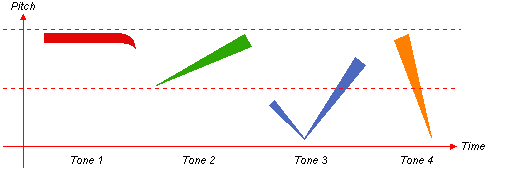
死 者 sǐ zhě the dead / the deceased 异 物 yì wù rarity / rare delicacy / foreign matter / alien body / the dead / ghost / monstrosity / alien life-form 没 电 méi diàn discharged / flat / dead (of batteries) 逝 者 shì zhě the dead / the deceased 尸 体 shī tǐ corpse / dead body 好 事 hǎo shì good action, deed, thing or work (also sarcastic, "a fine thing indeed") / charity / happy occasion / Daoist or Buddhist ceremony for the souls of the dead 没 了 méi le to be dead / not to be, or cease to exist 再 生 zài shēng to be reborn / to regenerate / to be a second so-and-so (famous dead person) / recycling / regeneration 死 人 sǐ rén dead person / (coll.) to die / (of a death) to happen 落 叶 luò yè dead leaves / to lose leaves (of plants) / deciduous 去 死 qù sǐ go to hell! / drop dead! 遗 体 yí tǐ remains (of a dead person) 靖 国 神 社 Jìng guó Shén shè Yasukuni Shrine, Shinto shrine in Tokyo to Japanese war dead, controversial as burial ground of several Class A war criminals 死 伤 sǐ shāng casualties / dead and injured 击 毙 jī bì to kill / to shoot dead 白 骨 bái gǔ bones of the dead 半 死 bàn sǐ half dead (of torment, hunger, tiredness etc) / (tired) to death / (terrified) out of one's wits / (beaten) to within an inch of one's life / (knock) the daylights out of sb 死 角 sǐ jiǎo gap in coverage / gap in protection or defenses / neglected or overlooked area / dead end 不 在 了 bù zài le to be dead / to have passed away 死 路 sǐ lù dead end / (fig.) the road to disaster 夜 深 人 静 yè shēn rén jìng in the dead of night (idiom) 枪 毙 qiāng bì to execute by firing squad / to shoot dead / fig. to discard / to get rid of 死 尸 sǐ shī corpse / dead body 兵 马 俑 bīng mǎ yǒng figurines of warriors and horses buried with the dead / Terracotta Army (historic site) 尸 骨 shī gǔ skeleton of the dead 枪 杀 qiāng shā to shoot dead 风 平 浪 静 fēng píng làng jìng lit. breeze is still, waves are quiet (idiom) / tranquil environment / all is quiet / a dead calm (at sea) 射 杀 shè shā to shoot dead (with a gun, or bow and arrow) 痛 不 欲 生 tòng bù yù shēng to be so in pain as to not want to live / to be so grieved as to wish one were dead 死 心 塌 地 sǐ xīn tā dì to be hell-bent on / dead set on sth / unswerving 起 死 回 生 qǐ sǐ huí shēng to rise from the dead (idiom) / fig. an unexpected recovery 清 明 节 Qīng míng jié Qingming or Pure Brightness Festival or Tomb Sweeping Day, celebration for the dead (in early April) 尸 首 shī shou corpse / carcass / dead body 枯 叶 kū yè dead leaf / withered leaf 陪 葬 péi zàng to be buried with or next to dead person (of deceased's partner, or of funerary objects) 扫 墓 sǎo mù to sweep a grave (and pay one's respects to the dead person) 尸 身 shī shēn corpse / dead body 末 路 mò lù dead end / impasse / end of the road / final days 死 气 沉 沉 sǐ qì chén chén dead atmosphere / lifeless / spiritless 早 死 zǎo sǐ to die while still relatively young / to have been dead (for some years) 家 破 人 亡 jiā pò rén wáng family bankrupt and the people dead (idiom) / ruined and orphaned / destitute and homeless 死 胡 同 sǐ hú tòng dead end / blind alley 假 死 jiǎ sǐ suspended animation / feigned death / to play dead 枯 木 kū mù dead tree 死 海 Sǐ Hǎi the Dead Sea 深 更 半 夜 shēn gēng bàn yè in the dead of night (idiom) 颅 骨 lú gǔ skull (of a dead body) 纸 钱 zhǐ qián ritual money made of paper burnt for the Gods or the dead 酩 酊 大 醉 mǐng dǐng dà zuì dead drunk / as drunk as a lord 烂 醉 làn zuì dead drunk / completely drunk 倒 卧 dǎo wò to lie down / to drop dead 幽 明 yōu míng the hidden and the visible / that which can be seen and that which cannot / darkness and light / night and day / wisdom and ignorance / evil and good / the living and the dead / men and ghosts 载 重 量 zài zhòng liàng dead weight / weight capacity of a vehicle 殉 葬 xùn zàng (of servants etc) to be buried alive with the deceased / (of utensils etc) to be buried with the dead 倒 毙 dǎo bì to fall dead 陶 俑 táo yǒng a pottery figurine buried with the dead 具 tool / device / utensil / equipment / instrument / talent / ability / to possess / to have / to provide / to furnish / to state / classifier for devices, coffins, dead bodies 正 当 中 zhèng dāng zhōng dead center / the very middle 明 日 黄 花 míng rì huáng huā lit. chrysanthemums after the Double Ninth Festival (idiom) / fig. outdated / thing of the past / dead letter 鸡 飞 蛋 打 jī fēi dàn dǎ the chicken has flown the coop and the eggs are broken / a dead loss (idiom) 入 殓 rù liàn to put dead body in coffin 故 happening / instance / reason / cause / intentional / former / old / friend / therefore / hence / (of people) to die, dead 挂 to hang / to suspend (from a hook etc) / to hang up (the phone) / (of a line) to be dead / to be worried / to be concerned / (dialect) to make a phone call / to register (at a hospital) / to make an appointment (with a doctor) / (slang) to kill / to die / to be finished / to fail (an exam) / classifier for sets or clusters of objects 挽 variant of 挽[wan3] / to draw (a cart) / to lament the dead 奠 to fix / to settle / a libation to the dead 殉 to be buried with the dead / to die for a cause 俑 wooden figures buried with the dead 槁 dried up (wood) / dead tree 殓 to prepare a dead body for coffin 殇 to die in childhood / war dead 诔 to eulogize the dead / eulogy 踣 (literary) to tumble / to fall down / (literary) to fall dead 胔 rotten meat / bones of dead animal 冢 中 枯 骨 zhǒng zhōng kū gǔ dried bones in burial mound (idiom) / dead and buried 室 迩 人 遐 shì ěr rén xiá to long for sb far away / to grieve over the dead 日 暮 途 穷 rì mù tú qióng sunset, the end of the road (idiom) / in terminal decline / at a dead end 死 无 对 证 sǐ wú duì zhèng the dead cannot testify (idiom) / dead men tell no tales 死 而 不 僵 sǐ ér bù jiāng dead but showing no signs of rigor mortis / to die hard (idiom) / to die yet not be vanquished (idiom) 死 马 当 活 马 医 sǐ mǎ dāng huó mǎ yī lit. to give medicine to a dead horse (idiom) / fig. to keep trying everything in a desperate situation 烂 醉 如 泥 làn zuì rú ní (idiom) to be dead drunk / to be plastered 生 死 肉 骨 shēng sǐ ròu gǔ lit. the dead returning to life / a miracle (idiom) 穷 途 末 路 qióng tú mò lù lit. the path exhausted, the end of the road (idiom) / an impasse / in a plight with no way out / things have reached a dead end 着 手 成 春 zhuó shǒu chéng chūn lit. set out and it becomes spring (idiom) / to effect a miracle cure (of medical operation) / to bring back the dead / once it starts, everything goes well 虽 死 犹 生 suī sǐ yóu shēng lit. although dead, as if still alive (idiom) / still with us in spirit 靡 有 孑 遗 mǐ yǒu jié yí all dead and no survivors 万 籁 无 声 wàn lài wú shēng not a sound to be heard (idiom) / dead silent 死 马 当 活 马 医 sǐ mǎ dàng huó mǎ yī lit. to give medicine to a dead horse (idiom) / fig. to keep trying everything in a desperate situation 死 棋 sǐ qí dead piece (in Chess) / stupid move / hopeless case 小 强 Xiǎo Qiáng (slang) cockroach ("Little Qiang" was originally the name given to a dead cockroach that had supposedly been a pet of the lead character in the 1993 Hong Kong comedy movie "Flirting Scholar". Subsequently, it came to be used as a name for any cockroach, and also for characters in film and television who are seemingly indestructible or repeatedly resurrected.) 死 区 sǐ qū dead zone / blind spot 賵 gift to the dead 死 衚 衕 sǐ hú tòng dead end / blind alley 死 伤 者 sǐ shāng zhě casualty (of an accident) / dead and wounded 垟 clay sheep buried with the dead 人 定 rén dìng middle of the night / the dead of night 倒 帐 dǎo zhàng dead loan / bad debts / to refuse to pay loan 仆 街 pū jiē drop dead! / go to hell! / fuck you! (Cantonese) 厚 死 薄 生 hòu sǐ bó shēng lit. to praise the dead and revile the living / fig. to live in the past (idiom) 哭 灵 kū líng to weep before a coffin or a memorial to the dead 哑 点 yǎ diǎn blind spot / dead spot





 jù
jù