"Husband" • Chinese-English Dictionary

DICTIONARY OPTIONS
CHARACTERS : Simplified Traditional
PHONETIC : Pinyin Bopomofo EFEO Wade-Giles Yale
» Search by Radical
 xiān sheng teacher / gentleman / sir / mister (Mr.) / husband / (dialect) doctor / CL:位[wei4]
 zhàng fu husband
 lǎo gōng (coll.) husband
 lǎo tóu old fellow / old man / father / husband
 hàn zi man / fellow / (dialect) husband
 xiàng gong lord / master / young gentleman / male prostitute / catamite / mahjong player disqualified by unintentionally taking in the wrong number of dominoes / (old form of address for one's husband) husband
 fū jūn (honorific) husband
 lǎo ér father / husband / old man
婿 fū xù (literary) husband
 liáng rén husband (arch.)
 fū husband / man / manual worker / conscripted laborer (old)
 zhàng measure of length, ten Chinese feet (3.3 m) / to measure / husband / polite appellation for an older male
婿 xù son-in-law / husband
 rén fū married man / husband (as a social role)
 fū qī husband and wife / married couple
 fū fù a (married) couple / husband and wife / CL:對|对[dui4]
婿 nu:3 xù daughter's husband / son-in-law
婿 nu:3 xu daughter's husband / son-in-law
 jiě fu (coll.) older sister's husband
 shuāng fēi flying in pairs / close union as husband and wife / round-trip flight / (slang) threesome
 juàn shǔ family member / husband and wife
 jià rén (of a woman) to get married / to take a husband
 kǒu zi hole / opening / cut / gap / gash / my husband or wife / classifier for people (used for indicating the number of people in a family etc) / precedent
 lǎo bàn (of an elderly couple) husband or wife
 fēn jū to separate (married couple) / to live apart (of husband and wife, family members)
 qián fū former husband
 láng jūn my husband and master (archaic) / playboy of rich family / pimp
 liǎng kǒu zi husband and wife
 guì jiàn noble and lowly / high versus low social hierarchy of ruler to people, father to son, husband to wife in Confucianism
 mèi fu younger sister's husband
 gū fu father's sister's husband / husband of paternal aunt / uncle
 kàng lì husband and wife (literary)
 liè nu:3 a woman who dies fighting for her honor or follows her husband in death
 zǐ fu older sister's husband
 hé zàng to bury husband and wife together / joint interment
 xiàng fū jiào zǐ to assist one's husband and educate the children (idiom) / the traditional roles of a good wife
 yí fu husband of mother's sister / uncle
 yí fu mother's sister's husband / husband of mother's sister
 yí zhàng mother's sister's husband / husband of mother's sister
 zāo kāng chaff, husks, distillers' dregs etc (food eaten by the poor) / (fig.) rubbish / junk / (abbr. for 糟糠妻[zao1 kang1 qi1]) wife who goes through the hardships of poverty with her husband
 luán fèng luan and phoenix / husband and wife / virtuous person / sovereign / belle
 gū zhàng husband of paternal aunt
 biǎo jiě fu husband of older female cousin via female line
 gū fu father's sister's husband / husband of paternal aunt / uncle
 wài zǐ (polite) my husband
婿 sūn nu:3 xù son's daughter's husband / granddaughter's husband
婿 sūn nu:3 xu son's daughter's husband / granddaughter's husband
 xùn jié to sacrifice one's life by loyalty (to one's prince, one's husband etc)
婿 zhí nu:3 xù brother's daughter's husband / niece's husband
婿 zhí nu:3 xu brother's daughter's husband / niece's husband
 lì husband and wife
 xiāng jìng rú bīn to treat each other as an honored guest (idiom) / mutual respect between husband and wife
 sān cóng sì dé Confucian moral injunctions for women, namely: obey in turn three men father, husband and son, plus the four virtues of morality 德[de2], physical charm 容, propriety in speech 言 / and efficiency in needlework 功
 sān gāng wǔ cháng three principles and five virtues (idiom) / the three rules (ruler guides subject, father guides son and husband guides wife) and five constant virtues of Confucianism (benevolence 仁, righteousness 義|义, propriety 禮|礼, wisdom 智 / and fidelity 信)
 jià jī suí jī If you marry a chicken, follow the chicken (idiom) / A woman should follow whatever her husband orders. / We must learn to accept the people around us.
 Hé dōng shī hǒu lit. the lioness from Hedong roars (idiom) / fig. refers to a shrewish wife or a henpecked husband
 Yà hā Ahab (9th c. BC), King of Israel, son of Omri and husband of Jezebel, prominent figure in 1 Kings 16-22
 jīn dì husband of wife's younger sister
 jīn xiōng husband of wife's older sister
婿 wài sheng nu:3 xù sister's daughter's husband
 zǐ zhàng older sister's husband
 yī fū yī qī lit. one husband one wife / monogamy
 gōng mǔ liǎ husband and wife
 xù variant of 婿, son-in-law / husband
 nu:3 shēng wài xiàng a woman is born to leave her family (idiom) / a woman's heart is with her husband
 rú yì láng jūn ideal husband / Mr. Right
 gū diē husband of father's sister / uncle
 dì sì sisters-in-law (old) / various concubines of a husband (old)
 Mèng jiāng nu:3 heroine of Qin dynasty 秦朝 / folk tale, who searched for her husband, and whose tears broke down a stretch of the Great Wall to reveal his body
 shǒu huó guǎ to stay at home while one's husband is away / grass widow
 xùn sǐ to be buried alive as sacrifice (together with husband or superior)
 ǒu jū to live together (as husband and wife)
使  husband natural resources (v.)
 jiě zhàng older sister's husband / brother-in-law
 shī zhàng teacher's husband
婿 jīn guī xù wealthy son-in-law / wealthy husband
婿 wài sheng nu:3 xu sister's daughter's husband
 táng mèi fu husband of younger female cousin via male line
 tǎng jiě fu husband of older female cousin via male line
 shào nián fū qī lǎo lái bàn husband and wife in youth, companions in old age
 biǎo mèi fu husband of younger female cousin via female line
 zāo kāng qī wife who goes through the hardships of poverty with her husband
PU P U the degree of suspicion that a woman might, after she marries, cheat on her husband (abbr. for "paternity uncertainty")
 liǎng kǒu r husband and wife / couple
 táng jiě fu husband of older female cousin via male line
 jù shǎo lí duō (idiom) (of a husband and wife, etc) to spend more time apart than together / to see each other very little
 gōng - pó husband's parents / parents-in-law / (dialect) a couple / husband and wife
 pāo fū - qì zǐ to abandon one's husband and child(ren)
 Lè chāng - pò jìng lit. the story of the broken mirror of Princess Lechang 樂昌公主|乐昌公主[Le4chang1 Gong1zhu3] (In the tale, the princess and her husband, fearing separation during the turbulence of war, broke a bronze mirror in half. They each kept one half as a token, with the promise to reunite by matching the pieces together. They were indeed separated, but eventually reunited, with the mirror playing a crucial role in their reunion.) (idiom) / fig. the reunion of separated lovers or the restoration of a relationship
 wéi fū (archaic) term used by a husband to refer to himself when speaking to his wife
 jù shǎo - lí duō (idiom) (of a husband and wife etc) to spend more time apart than together / to see each other very little

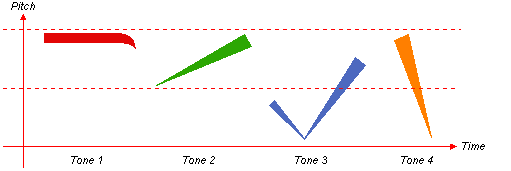
Chinese Tones